
Licensed LA Basement Contractor
Basement Construction & Expansion
in
Los Angeles
Lux Construction Group is a Los Angeles–based licensed general contractor specializing in basement construction, excavation, expansion, and finishing. We build new basements, dig out existing crawl spaces and basements, and convert below-grade space into habitable rooms across Los Angeles.
35+
Years in Los Angeles
200+
Projects Completed
100%
GMP GUARANTEED
CSLB
Licensed & Insured
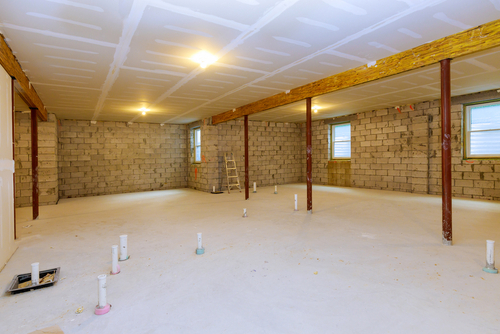
Under the Los Angeles Municipal Code, basement square footage that meets the city’s definition is generally excluded from a single-family residence’s Residential Floor Area calculation,.
Which is the reason basement construction is one of the few ways to add livable square footage on a maxed-out LA lot. We coordinate the full engineering and construction stack: soils investigation, structural engineering, dewatering and shoring, LADBS permitting, excavation, waterproofing, MEP, egress, and finished interior — under one Guaranteed Maximum Price contract.
Questions we are often asked
Yes. Basements are legal residential construction in Los Angeles when designed, engineered, and built per the California Building Code, LA Municipal Code, and LADBS plan check requirements.
The most common confusion is whether basements count toward Residential Floor Area (RFA). Under the Los Angeles Municipal Code, qualifying basement space — generally defined as space where the floor of the story above is not more than 6 feet above grade at any point — is excluded from RFA calculations for single-family residences. This is the primary reason basement construction is so popular in maxed-out westside LA neighborhoods. Confirm specific RFA exclusion language with LADBS or a zoning attorney for your specific lot before relying on it.
Under the Los Angeles Municipal Code, qualifying basement space is generally excluded from a single-family residence’s Residential Floor Area calculation. The qualifying definition centers on the basement’s relationship to grade — typically, the floor of the story above must not be more than 6 feet above grade at any point on the perimeter.
If your basement extends more than 6 feet above grade, LADBS reclassifies it as a story and it counts toward RFA. We design every basement specifically to meet the LAMC exclusion definition. Beverly Hills, Santa Monica, and other incorporated cities have their own zoning codes with different basement definitions — verify your specific jurisdiction.
Yes — adding a basement to an existing house is one of the most common LA basement projects, but it’s also the most complex. The process requires underpinning the existing foundation in segments, excavating below the house, and constructing new basement walls and slab while the house remains in place above.
This type of project typically takes 12 to 20 months and costs $500,000 to $1.2M+. Cost is driven primarily by soils conditions, house size, and site access. Underpinning and shoring are the highest-risk construction phases — they require licensed structural engineering and experienced excavation and shoring contractors.
Yes. Any new basement or basement expansion in Los Angeles requires a geotechnical (soils) investigation by a licensed California geotechnical engineer.
The soils report drives every downstream decision: foundation design, shoring system, waterproofing scope, dewatering during construction, and structural engineering. Test borings determine soil type, bearing capacity, water table depth, and expansive soil potential. A typical residential soils investigation costs $5,000–$15,000 — and is the cheapest insurance policy you can buy against a $200,000 mid-construction surprise.
Modern LA basement waterproofing is a multi-layer system: a liquid-applied or sheet-applied waterproofing membrane on the exterior basement wall, a drainage board to channel water away from the membrane, a perimeter foundation drain at the footing, and a sump pump system to remove collected water.
Waterproofing is the single most important construction stage on a basement project. A failed waterproofing system creates moisture problems, mold, and finished-room damage that can cost $50,000+ to remediate years after construction. We document the waterproofing installation in detail and pressure-test the perimeter drain before backfilling.
Yes. Basement conversions can qualify as Accessory Dwelling Units (ADUs) under California ADU law, generating rental income or providing living space for extended family.
Basement ADUs require their own kitchen, bathroom, separate entry, egress windows meeting code, ceiling height compliance, and independent utility provisions where applicable. The ADU classification triggers slightly different code requirements than a standard basement finishing (Title 24, accessibility provisions, fire separation from primary residence). We coordinate basement-to-ADU conversions under both basement construction and ADU code paths simultaneously.
Yes. Hillside basement construction is common in Hollywood Hills, Pacific Palisades, Bel Air, Beverly Crest, and other LA hillside neighborhoods — and it’s one of our specialty areas. Hillside basements often integrate retaining walls, cantilevered structural conditions, and slope-stability engineering into the basement envelope.
Hillside lots fall under LADBS hillside ordinance requirements with additional grading, slope-stability, and landslide-zone reviews. Hillside basements take longer (14–24 months end-to-end), cost more ($500K–$1.5M+), and require more engineering than flat-lot basements. They’re also where the highest property-value lift typically lives.
Yes — in most LA markets, well-built basement additions return 60–100% of construction cost in immediate appraised value, and substantially more in real resale value in premium westside neighborhoods.
In neighborhoods where lot size and FAR limits constrain above-grade square footage — Brentwood, Beverly Hills, Bel Air, Pacific Palisades, Holmby Hills, Westwood, Hancock Park — adding a basement is often the only way to add livable square footage at all. In these markets, basement square footage commonly trades at near-parity with above-grade square footage on resale, meaning a $500,000 basement project can add $700,000–$1.2M to home value. Specific ROI varies by neighborhood; Isaac runs comparable analysis as part of feasibility.
Tell us
what you're building
A project manager will respond within one business day to schedule a consultation — at your site, our Wilshire office, or over a call.
Office
10850 Wilshire Blvd, Suite 301
Los Angeles, CA 90024
Hours
Sat · By appointment